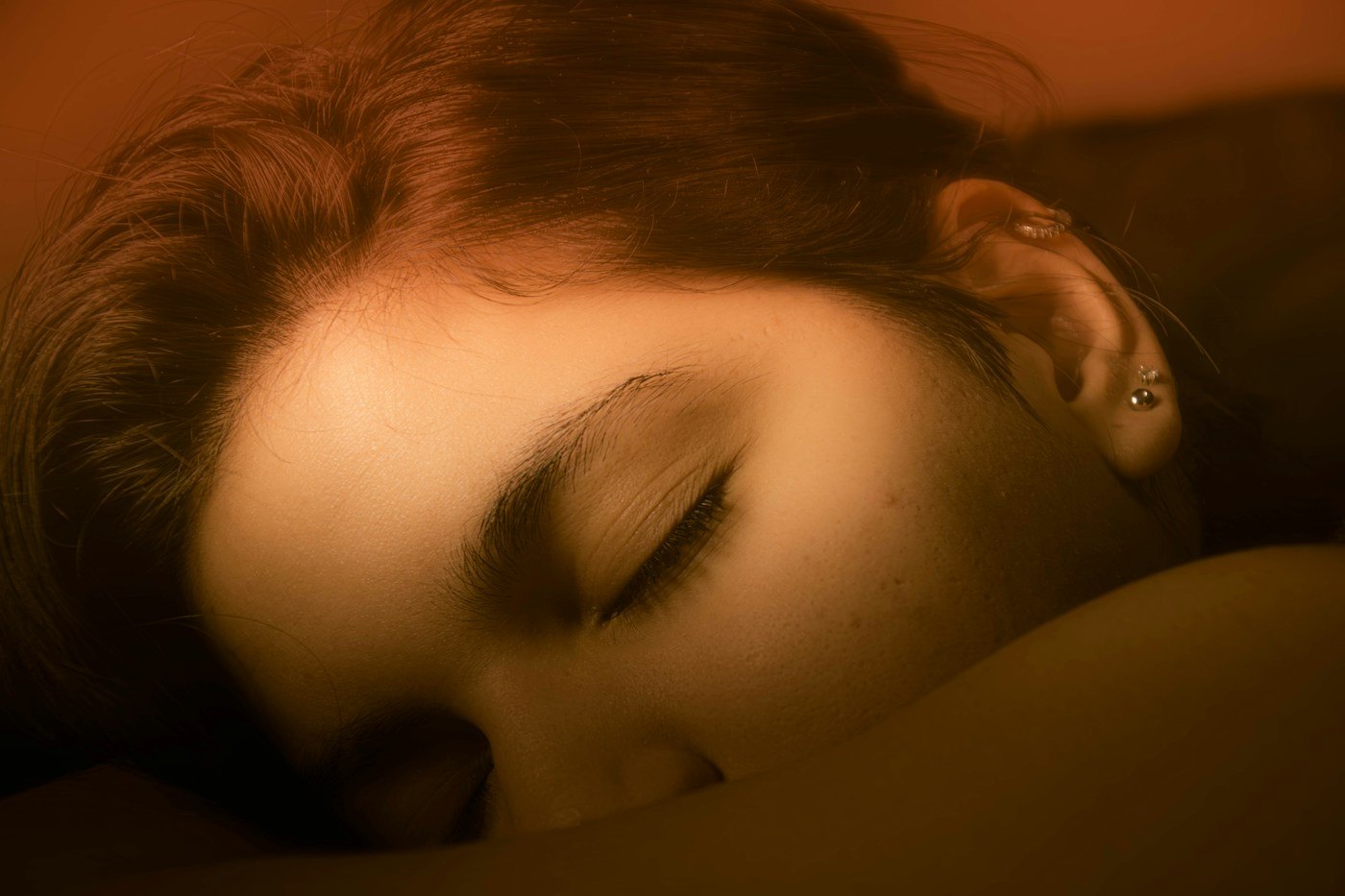
Sleep apnea can interrupt breathing during sleep, and women may notice fatigue, morning headaches, insomnia, or repeated waking rather than obvious snoring. These symptoms also have other explanations. A symptom checklist cannot diagnose sleep apnea or rule it out. If sleep is not leaving you rested, bring the pattern to a healthcare professional and ask whether a sleep assessment is appropriate. You do not need a recording of yourself snoring to start that conversation.
A little clarity, made practical
Build your sleep conversation note
Explore the four parts of a useful sleep conversation, then choose the prompts you want to bring. There is no score, and nothing here rules sleep apnea in or out.
Tap each step to explore. This is a planning tool; it does not assess your health or tell you whether care is urgent. Read the care guidance in the article.
Step 1 / 4
Notice the pattern
Start with what has changed: how rested you feel, how often you wake, and whether you fall asleep unintentionally.
View a plain-text copy of your note
Build your sleep conversation note
A planning note, not a diagnosis or a completed medical assessment.


Guidance: https://www.nhlbi.nih.gov/health/sleep-apnea/diagnosis
Health facts: Read the source guidance ↗. The step sequence and note prompts are Millywell’s editorial planning suggestions.
The clue may be how you feel the next day
You gave yourself a reasonable bedtime. You spent the night in bed. By late morning, you are negotiating with your eyelids again. It is easy to decide you need more discipline, another supplement, or a more impressive evening routine. Persistent unrefreshing sleep deserves a wider conversation.
Sleep apnea is one possibility, not a conclusion. NHLBI notes that women may report insomnia, tiredness, headaches, mood symptoms, and frequent waking. Some people do not know their breathing is being interrupted because those changes happen while they are asleep.
- Notice whether this is a change from your usual energy.
- Describe tiredness separately from actually falling asleep unintentionally.
- Mention morning headaches or repeated waking alongside daytime symptoms.
Sources: NHLBI · Sleep apnea and women ↗ · NHLBI · Sleep apnea symptoms ↗
Do not wait for a stereotypical version of the condition
A partner saying you stop breathing or gasp during sleep is important information. So is loud snoring. But living alone, sleeping quietly, or having nobody available to observe you does not settle the question. Lack of an observation is not the same as a negative test.
Your medical history matters too. NHLBI identifies pregnancy, the menopause transition, and PCOS as contexts that may increase risk. Having one of those circumstances does not mean you have sleep apnea; it gives your clinician something relevant to consider.
- Tell the clinician about witnessed breathing pauses or gasping, if known.
- Include PCOS, pregnancy, menopause changes, and family history in the conversation.
- Avoid deciding who qualifies for assessment based on appearance.
Sources: NHLBI · Sleep apnea and women ↗ · NHLBI · Diagnosing sleep apnea ↗
Bring a small amount of useful information
A sleep diary can help organize what your nights and days actually look like. It does not need to become a second job. A few clear observations are often easier to discuss than a month of unlabeled screenshots. This is preparation, not a requirement to complete before asking for care.
Millywell’s suggestion is to write one short description of the main problem, then a few examples. “I keep falling asleep during quiet meetings even after a night in bed” communicates something more concrete than “my energy is terrible.”
- Note approximate bedtimes, wake times, and whether sleep feels refreshing.
- Write down awakenings and any breathing observations you already know about.
- Bring a medicine list and describe how sleepiness affects work, driving, or caregiving.
Sources: NHLBI · Diagnosing sleep apnea ↗
What a sleep assessment can involve
A clinician reviews symptoms and history and may arrange a sleep study or refer you to a sleep specialist. Sleep testing helps establish whether sleep apnea is present, which type it is, and its severity. Your symptoms also deserve consideration beyond this one condition.
Useful questions include what the proposed test can answer, what preparation is needed, who will explain the result, and what happens if the result does not explain how you feel. Ask about the setting and cost before the appointment if those could stop you from attending. Those practical questions belong in healthcare.
- Ask who orders the study and who reviews it with you.
- Check insurance requirements and any equipment-return arrangements.
- Agree on the next step if symptoms continue after the initial assessment.
Sources: NHLBI · Diagnosing sleep apnea ↗
A wearable can start a conversation; it cannot finish it
A chart from a watch or phone may help you explain what caught your attention. It is not the same thing as the clinical sleep assessment described by NHLBI. Do not use a reassuring dashboard as your reason to dismiss persistent symptoms.
Equally, an alarming night on a consumer device does not establish a diagnosis. Bring the observation, explain how you feel, and ask what testing would actually change your care. You can care about your sleep without spending every morning auditing a sleep score.
Sources: NHLBI · Diagnosing sleep apnea ↗
Make safety the immediate priority
If you are struggling to stay awake, do not drive or operate machinery. Arrange another way to travel and seek prompt advice about the sleepiness. Completing a diary or trying an evening routine should never come before immediate safety.
For ongoing symptoms, your next useful step can be a straightforward appointment request: “My sleep is not restoring my energy, and it is affecting my day. Could we review possible causes, including sleep apnea?” You are asking for assessment, not trying to supply your own diagnosis.
Sources: NHLBI · Sleep apnea symptoms ↗
A little more clarity
Your questions, answered.
Can women have sleep apnea without loud snoring?
Yes. NHLBI explains that women may not report the familiar snoring pattern and may instead notice tiredness, insomnia, headaches, or repeated waking. Those symptoms are not specific enough to diagnose sleep apnea, so persistent problems need assessment.
Does being tired automatically mean I need a sleep study?
No. A clinician considers your history and the possible explanations before deciding whether sleep testing is useful. Explain how often the tiredness happens and what it prevents you from doing.
Should I wait until I have a full week of sleep notes?
No. Notes can make the conversation easier, but they are optional preparation. Do not delay care for significant symptoms, and do not drive when you cannot stay awake.
Choose the one daytime problem you most want help with, add any breathing observations you already know about, and bring those to a sleep conversation.
Prepare your appointment questions →Sources & context.
Sources checked . Health information summarizes the linked guidance; conversation prompts and planning ideas are Millywell’s editorial suggestions. Most sources describe U.S. care; screening and access may differ where you live.
AI assisted the drafting. This guide has not been reviewed by a licensed clinician. It provides general education, not a diagnosis or individualized care. Ask a qualified professional about your circumstances.